

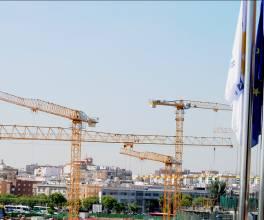
 The sector
Construction activities play a major role in the socio-economic development of a country, providing building and infrastructure on which all sectors of the economy depend. Construction is thus a sector of high strategic importance.
In the EU, the construction sector as a whole represents approximately 10% of GDP and is also the largest industrial employer (30% of industrial employment), with an estimated 3.1 million enterprises in 2007 and 14.8 million employees, including 19% self-employed staff. Construction is responsible for a large share of European environmental impact: the construction process generates a huge amount of waste, consumes more than 50% of European natural resources and can affect biodiversity and soil. The main construction product, the building, is responsible for more than 30% of the European carbon footprint and more than 40% of the primary energy consumption in Europe.
For this sector, the Sectoral Reference Document is not available, whereas, only a technical report is available.
Work plan
- Development of Background Document: January 2010 – August 2010
- Contact with stakeholders and setting up the Technical Working Group (TWG): January 2011.
- Kick-off meeting of the TWG, Brussels, 30 March 2011.
- Development of the first draft of the best practice report for the Construction sector, January 2011 – November 2011.
- Final Meeting of the TWG, Brussels, 22-23 November 2011
- Final draft of the best practice report for the Construction sector, September 2012.
Project Team
The following people are part of the JRC EMAS SRD team:
- Paolo Canfora
- Marco Dri
- Ioannis Antonopoulos
- Pierre Gaudillat
The best way to contact the JRC EMAS SRD team is sending an e-mail to JRC-EMAS-SRD@ec.europa.eu
Documents
2012
2011
- Minutes of the Final Meeting of the Technical Working Group for the Reference Document on Best Environmental Management Practices in the Construction Sector
- Presentation at United Nations Environmental Program – Sustainable Buildings and Climate Initiative
- Minutes of the Kick-Off Meeting of the Technical Working Group for the Reference Document on Best Environmental Management Practices in the Construction Sector
2010